
What a root canal is
Inside every tooth is soft tissue called the pulp. It holds the tooth’s nerve and blood supply. Deep decay, a crack, or an injury can let germs reach the pulp. The pulp can then become infected or badly inflamed.
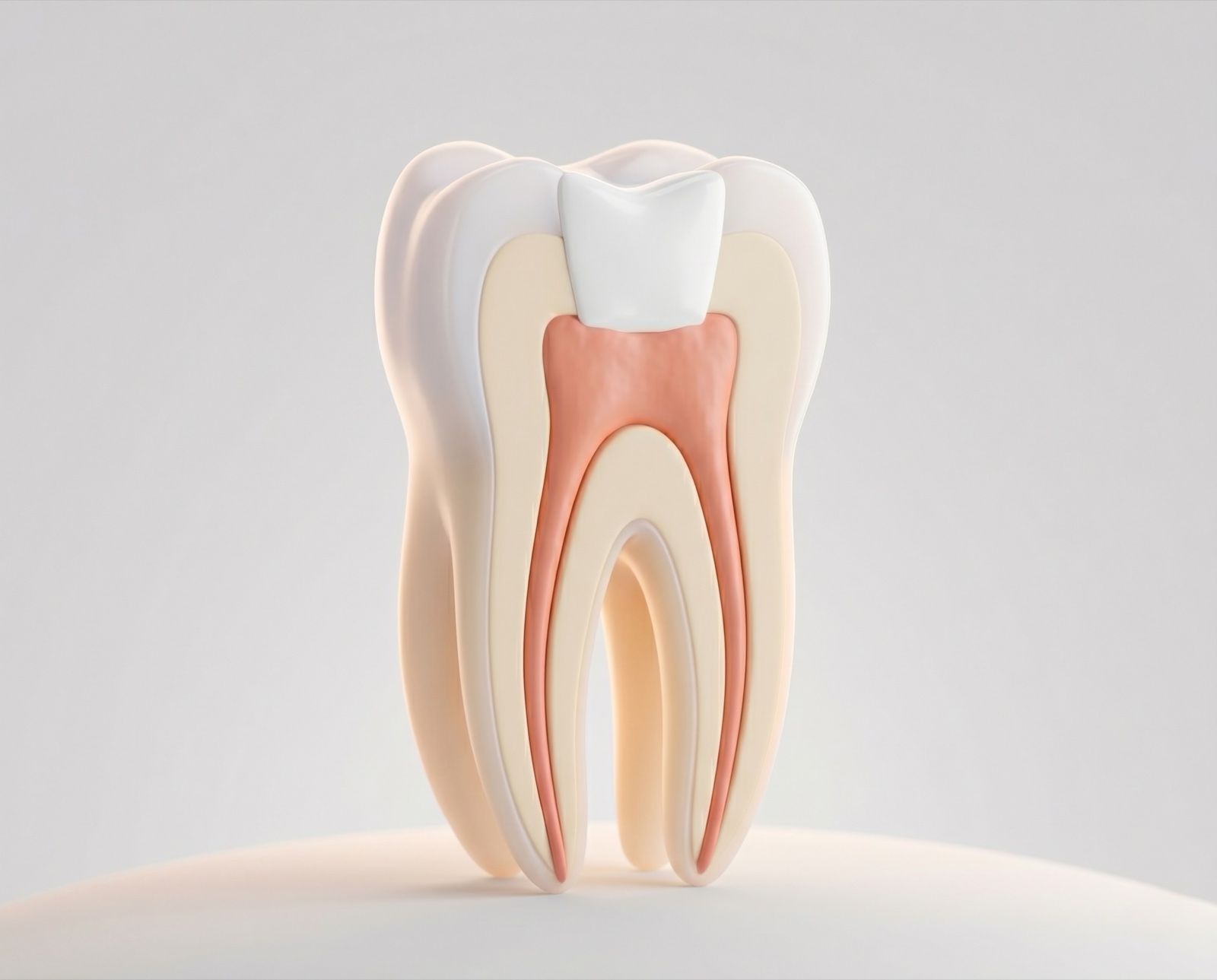
A root canal removes the pulp, cleans the inside of the tooth, and seals it. The tooth stays in your mouth.
Signs you might need one
- A toothache that keeps you up or does not go away
- Pain when you bite down
- Sensitivity to hot or cold that lingers
- Swelling, or a bump on the gum near the tooth
- A tooth that has turned darker
Sometimes there are no symptoms and the problem shows up on an X-ray.
What to expect
- We take an X-ray to see the roots.
- We numb the tooth and the area around it, and check that you are numb before going on.
- We make a small opening in the tooth and clean out the inside.
- We fill and seal the space.
- Most back teeth need a crown afterward to protect them.
Afterward
- The tooth and the gum around it can be sore for a few days, mostly when you bite.
- Chew on the other side until the final filling or crown is on. Until then the tooth can crack.
- Call us if you have swelling, if the pain gets worse, or if your bite feels uneven.
Good to know
- A root canal treats the cause of the pain and lets you keep your own tooth.
- The tooth still needs a final filling or a crown. A back tooth left without one can break.
- A root canal does not always work. Now and then a treated tooth does not heal and needs to be treated again or taken out.
If you wait
An infected tooth does not heal by itself. The infection can spread into the jaw and cause swelling in the face.
If you have swelling that is spreading, a fever, or trouble breathing or swallowing, do not wait. See emergency visits.
Your other choice
The other way to treat an infected tooth is to take it out. We will go over both choices, and what each means for the space left behind.
Some teeth are better treated by a root canal specialist. If that is true for your tooth, we will tell you and refer you.
Cost and insurance
The cost depends on which tooth it is, because back teeth have more canals than front teeth. Ask us about the crown too, so you know the cost of the whole repair and what your plan is expected to pay before treatment starts. See insurance and cost.
Common questions
Does a root canal hurt?
The tooth and the area around it are numbed first, and we check that you are numb before going on. Much of the pain people link to root canals comes from the infection, which the treatment removes. The tooth can be sore for a few days afterward.
How many visits does it take?
Many root canals take one or two visits. Most back teeth then need another visit or two for a crown.
Can antibiotics fix it?
No. Antibiotics can calm an infection for a while, but they do not remove the infected tissue inside the tooth. The problem comes back unless the tooth is treated or taken out.
Would it be easier to pull the tooth?
Sometimes taking the tooth out is the right choice. It is quicker, but it leaves a gap, and replacing a tooth later adds cost. We will go over both choices with you. See extractions.
The pain went away. Do I still need treatment?
Probably. When the nerve inside a tooth dies, the pain can stop while the infection is still there. Have it checked before it flares up again.