

What a filling does
A cavity is a spot where decay has made a hole in the tooth. A filling removes the decay and fills the hole so the tooth can keep working.
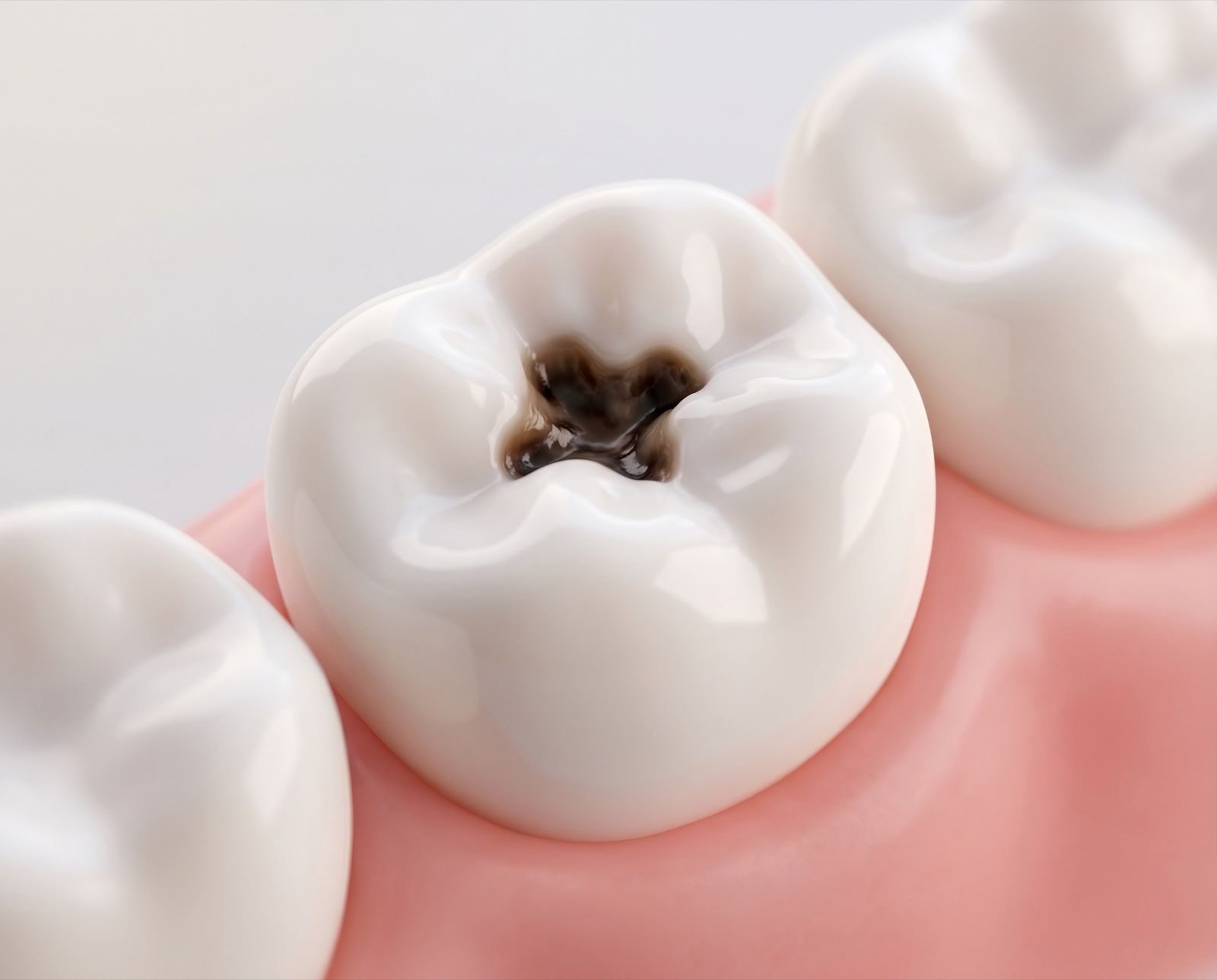
We use tooth-colored filling material. It is matched to the shade of your tooth.
How a cavity starts
The germs in plaque feed on sugar from what you eat and drink. They make acid, and the acid takes minerals out of the tooth.
A very early soft spot can sometimes be stopped with fluoride and better cleaning, before a hole forms. Once there is a hole, it does not heal. It needs to be repaired, or it keeps growing.
What to expect
- We numb the tooth and the area around it.
- We remove the decay.
- We place the filling material in layers and harden it with a light.
- We shape it and check your bite.
A filling is usually done in one visit.
Afterward
- Your lip, cheek or tongue may stay numb for a few hours. Be careful not to bite them.
- The tooth can be sensitive to hot, cold or pressure for a few days.
- If your bite feels uneven, or the sensitivity does not ease, call us.
Good to know
- A filling keeps more of your own tooth than a crown does.
- A tooth-colored filling blends in with the tooth.
- A filling repairs the damage. It does not stop new decay. Brushing, cleaning between your teeth and regular checkups still matter.
- A very large filling can leave the tooth around it weak. That is when a crown may be the better repair.
If you wait
Decay does not stay the same size. A small cavity that could have been a small filling can grow until it reaches the nerve. Then the tooth needs a root canal or has to come out.
Small chips
A small chip can often be repaired with the same tooth-colored material. This is called bonding. See whitening, bonding and veneers.
When a filling is not enough
If a tooth has lost a lot of its structure, a crown may be a better repair. If decay has reached the nerve, the tooth may need a root canal. We will show you what we see and go over your choices.
Cost and insurance
What a filling costs depends on the tooth and on how much of it needs to be repaired. Before any treatment starts, ask us what it will cost and what your plan is expected to pay. See insurance and cost.
Common questions
How do I know if I have a cavity?
Often you do not. A small cavity usually does not hurt. Later signs are sensitivity to sweets or cold, pain when you bite, or a dark spot or hole you can see or feel. Many cavities are found on X-rays at a checkup, before they cause any trouble.
Will getting a filling hurt?
We numb the tooth and the area around it first. You will feel pressure and vibration. If you feel pain, raise your hand and we will stop.
Can I eat after a filling?
A tooth-colored filling is hardened with a light before you leave, so the filling itself is ready. Wait until the numbness wears off before you chew, so you do not bite your lip, cheek or tongue.
Should I have my old silver fillings replaced?
If an old silver filling is in good shape, there is usually no need to replace it. We replace fillings that are worn, cracked, or have decay around them.
How long does a filling last?
Years, but not forever. Fillings can wear, chip or leak over time. We check them at each checkup and tell you when one needs attention.