
When a tooth needs to come out
- It is too damaged or decayed to repair
- It is badly infected
- It is loose from gum disease
- It is a wisdom tooth that is stuck, painful, or crowding other teeth
If you would rather keep the tooth, ask us whether a root canal and crown are possible.
What to expect
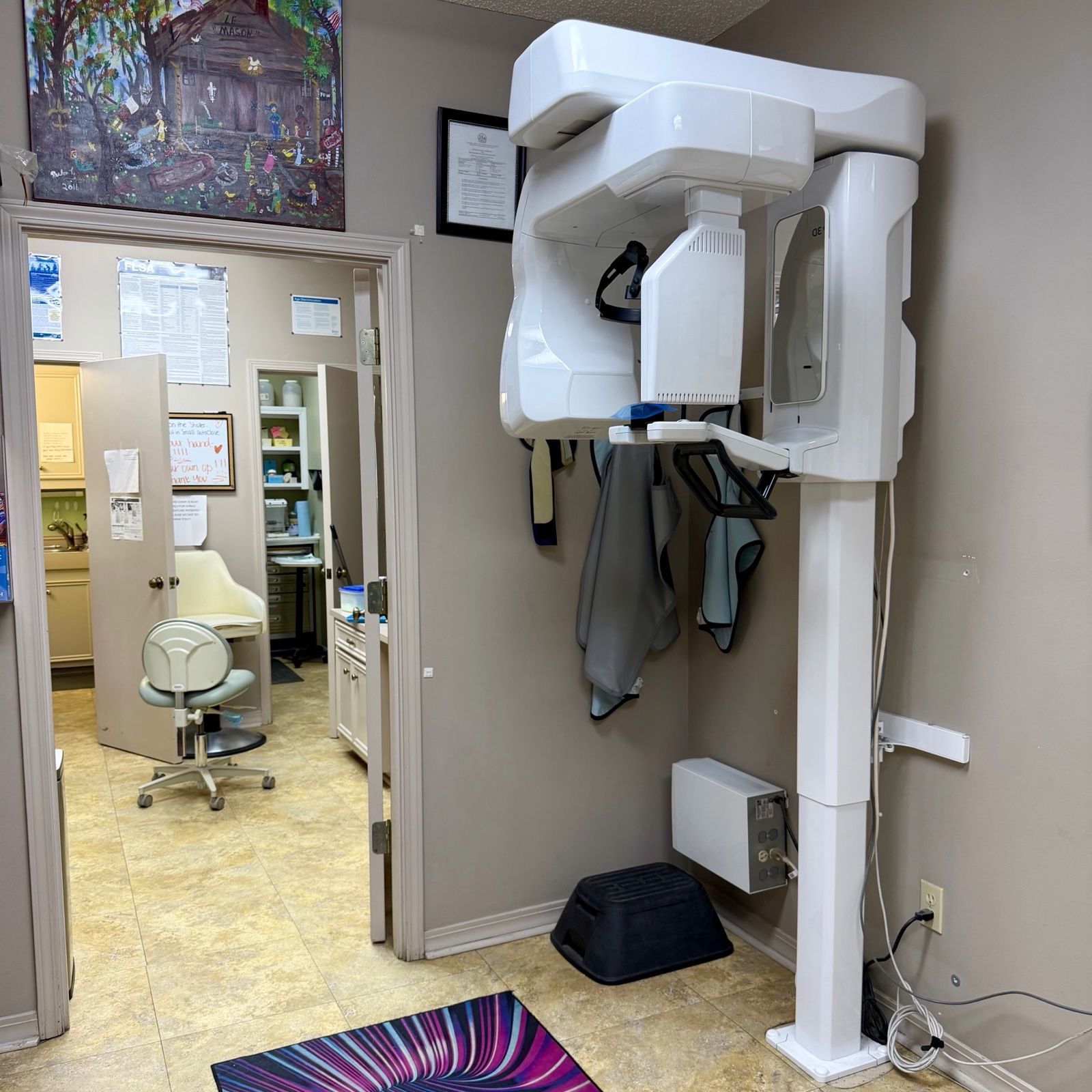
- We take an X-ray. For wisdom teeth we may take a 3D X-ray to see the roots and the nerves near them.
- We numb the area and check that you are numb before going on.
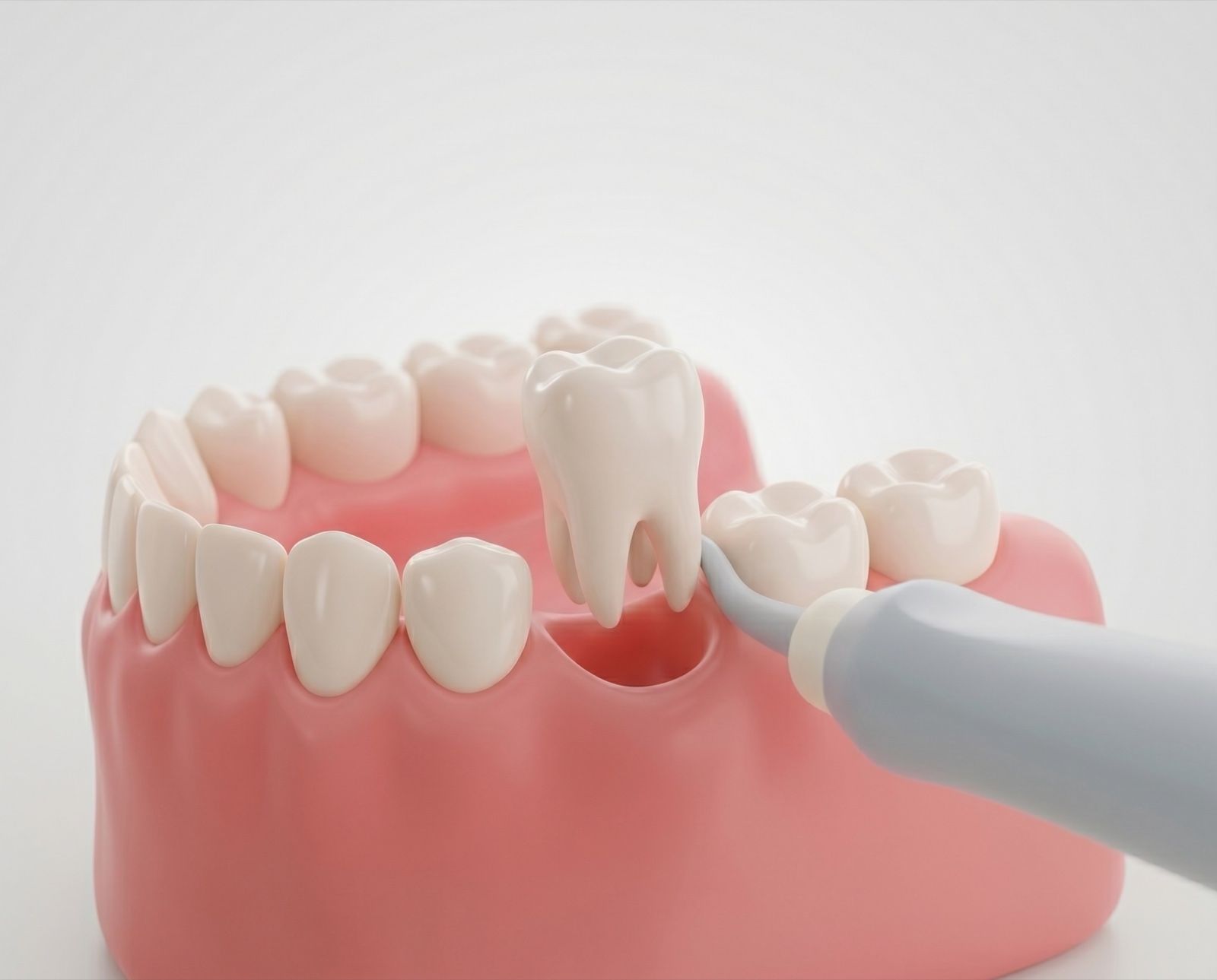
- We loosen the tooth and remove it. You will feel pressure.
- We place gauze for you to bite on and go over how to care for the area at home.
We offer sedation: laughing gas, a pill, or IV sedation. Tell us when you call if you want to talk about it.
Simple and surgical extractions
A tooth that is fully in and can be gripped usually comes out whole. That is a simple extraction.
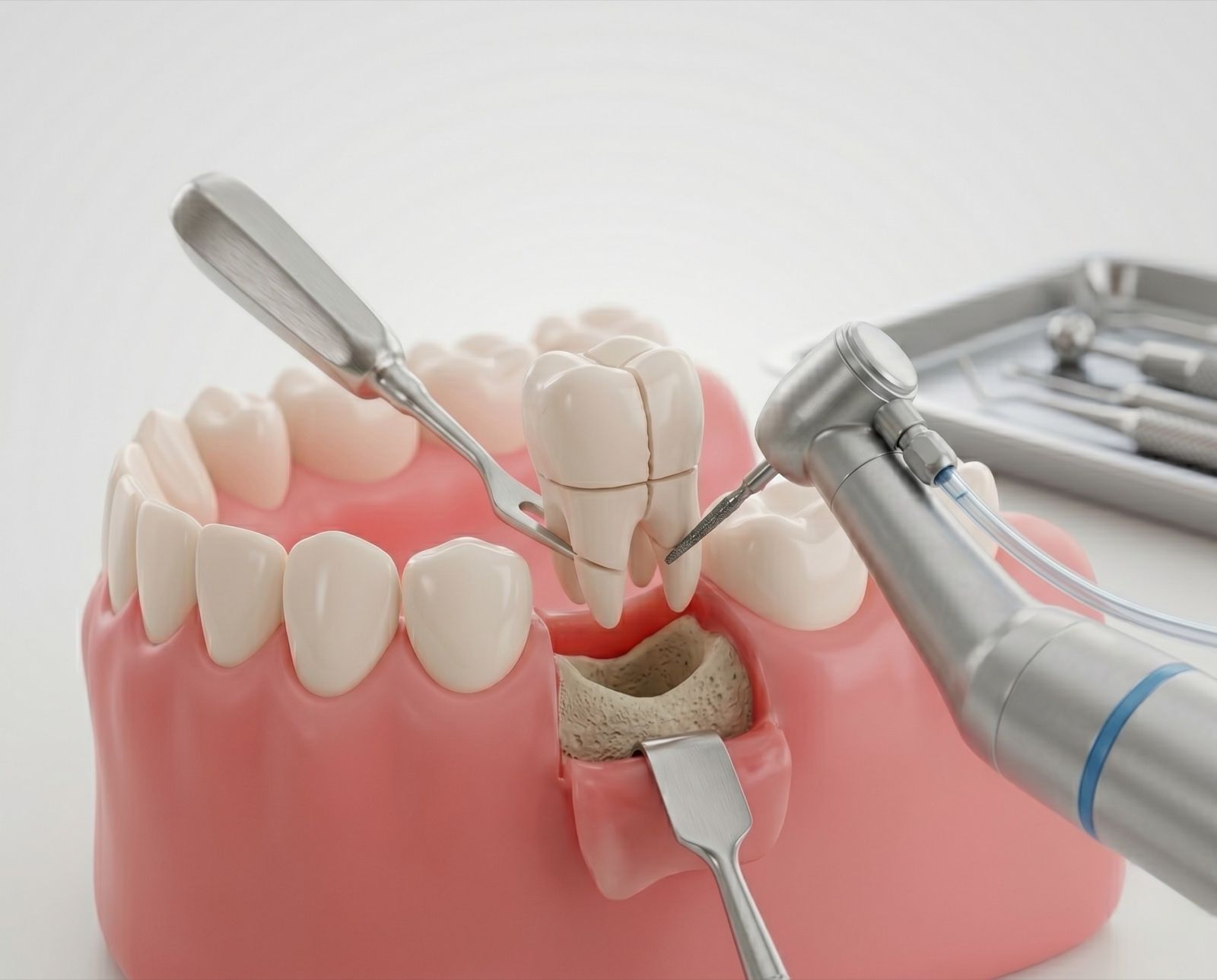
Some teeth need more work to remove. The tooth may be stuck under the gum, broken off at the gumline, or have long or curved roots. For these, a small opening is made in the gum, and the tooth may be taken out in sections. The gum is often closed with a few stitches. This is a surgical extraction.
A surgical extraction usually means more swelling and soreness afterward, and a longer time to heal.
Wisdom teeth
We take out wisdom teeth here. Some wisdom teeth are better handled by an oral surgeon. If that is true for you, we will tell you and refer you.
Caring for your mouth afterward
- Bite on the gauze as directed to slow the bleeding.
- Do not smoke, spit hard, or drink through a straw for the first few days.
- Eat soft foods and chew on the other side.
- Hold a cold pack on your cheek, on and off, during the first day to keep swelling down.
- Call us if the bleeding does not slow down, if you have swelling that gets worse, or if the pain gets worse after a few days.
Some oozing, soreness and swelling in the first days is normal. A fever, or swelling that spreads toward your eye or neck, is not. See emergency visits.
Filling the space
After a tooth comes out, the bone that held it slowly shrinks, and the teeth beside the gap can drift into it. You may want to replace the tooth. See bridges, dentures and partials and dental implants.
Ask us about this before the tooth comes out. Some choices are easier to plan ahead of time.
Cost and insurance
A surgical extraction costs more than a simple one, and sedation is a separate cost. Before any treatment starts, ask us what it will cost and what your plan is expected to pay. See insurance and cost.
Common questions
Will I be awake?
Yes, unless you choose sedation. The area is numbed, so you feel pressure but not pain. We also offer laughing gas, a pill, or IV sedation. See sedation.
Can I get a tooth pulled the same day?
We offer emergency and same-day visits, so call as early in the day as you can. Whether the tooth comes out that day depends on what we find, for example an infection that needs to settle first, or your health history.
What is a dry socket?
After a tooth comes out, a blood clot forms in the socket and protects the bone while it heals. If the clot comes out too early, the bone is left uncovered and it hurts, usually starting a few days after the extraction. That is a dry socket. Not smoking, not spitting hard and not using a straw help keep the clot in place. Call us if the pain gets worse after a few days.
How long does it take to heal?
Most people feel better within a few days of a simple extraction. Soreness and swelling last longer after a surgical one. The gum closes over in a few weeks, and the bone underneath fills in over a few months.
Do all wisdom teeth have to come out?
No. A wisdom tooth that has come in fully, is healthy, and can be kept clean may be left alone and watched. We look at yours on an X-ray and tell you what we see.