

What an implant is
A dental implant replaces a missing tooth. It has three parts:
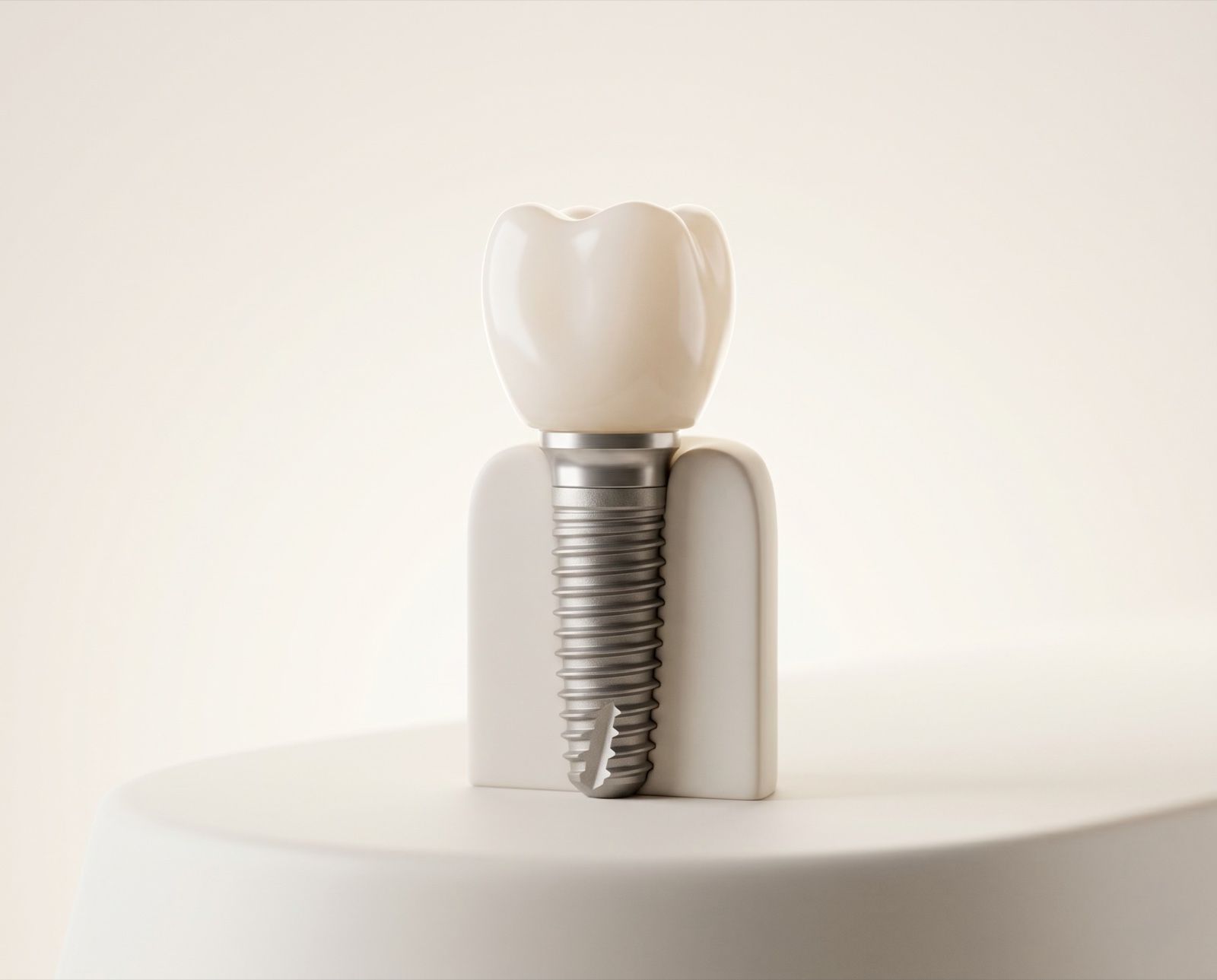
- The implant. A small post placed in the jawbone, where the root of the tooth used to be.
- The connector. A piece that attaches to the post.
- The crown. The part that looks like a tooth.
What we do here
We do both parts of implant treatment in our office. We place the implant, and we make and attach the tooth that goes on it.
We also do full-arch implant treatment, which is described below.
The steps
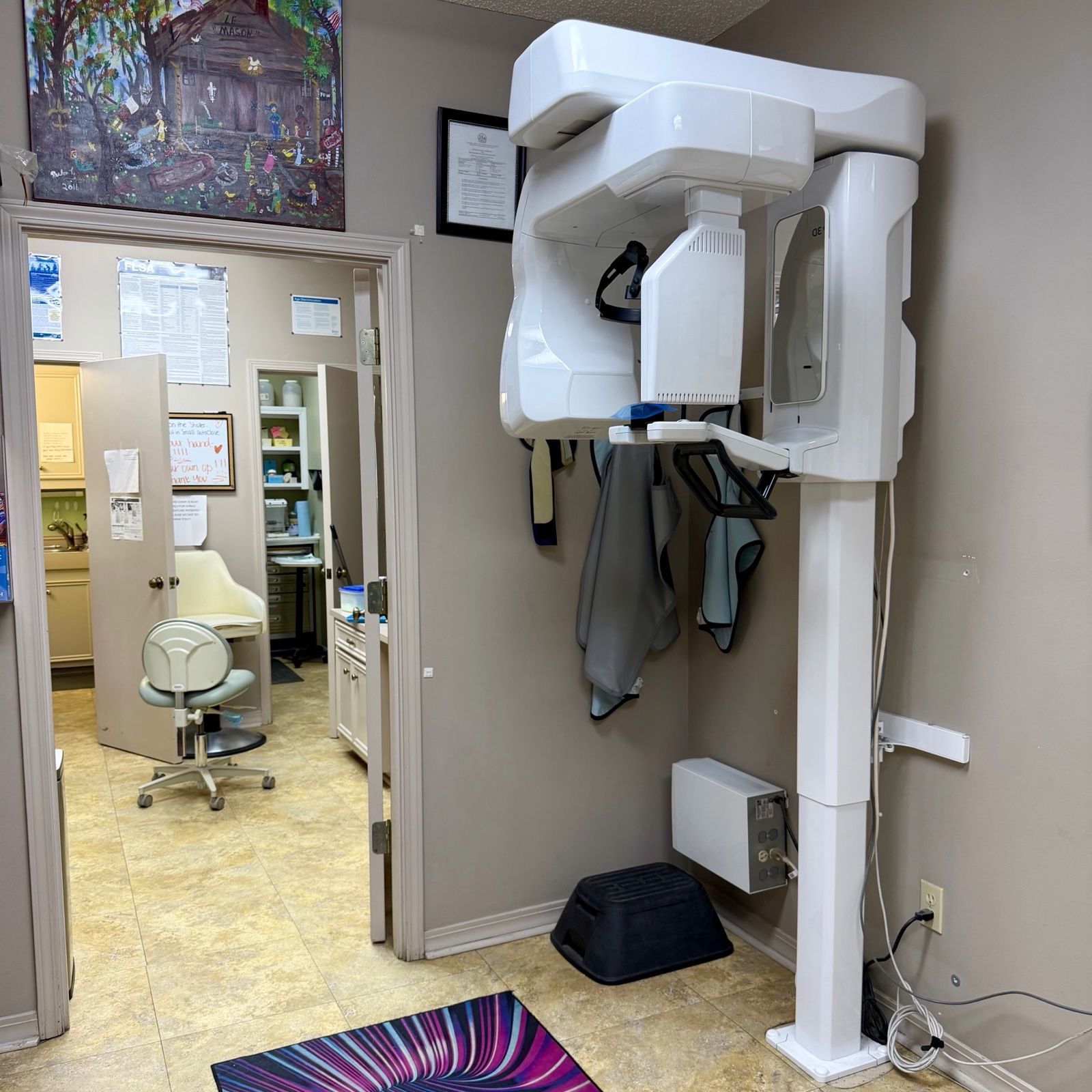
- Exam and planning. We examine your mouth and take a 3D X-ray to look at the bone and the nerves near it.
- Placing the implant. The post is placed in the jawbone.
- Healing. The bone needs time to grow around the post. This takes months.
- The crown. Once the implant is healed, the connector and crown go on.
Good to know
- An implant stands by itself. The teeth beside it do not have to be shaped, as they do for a bridge.
- Because the post takes the place of the root, it helps keep the bone in that spot from shrinking.
- It takes surgery, and it takes longer than a bridge or a denture.
- It usually costs more at the start than the other choices.
- Not every implant heals as planned. Smoking and diabetes that is not under control both lower the chance of success.
Full-arch implants
Full-arch treatment replaces all the teeth in the upper jaw, the lower jaw, or both. A full set of teeth is fixed onto several implants, usually four or six. You may have heard it called All-on-4 or All-on-6.
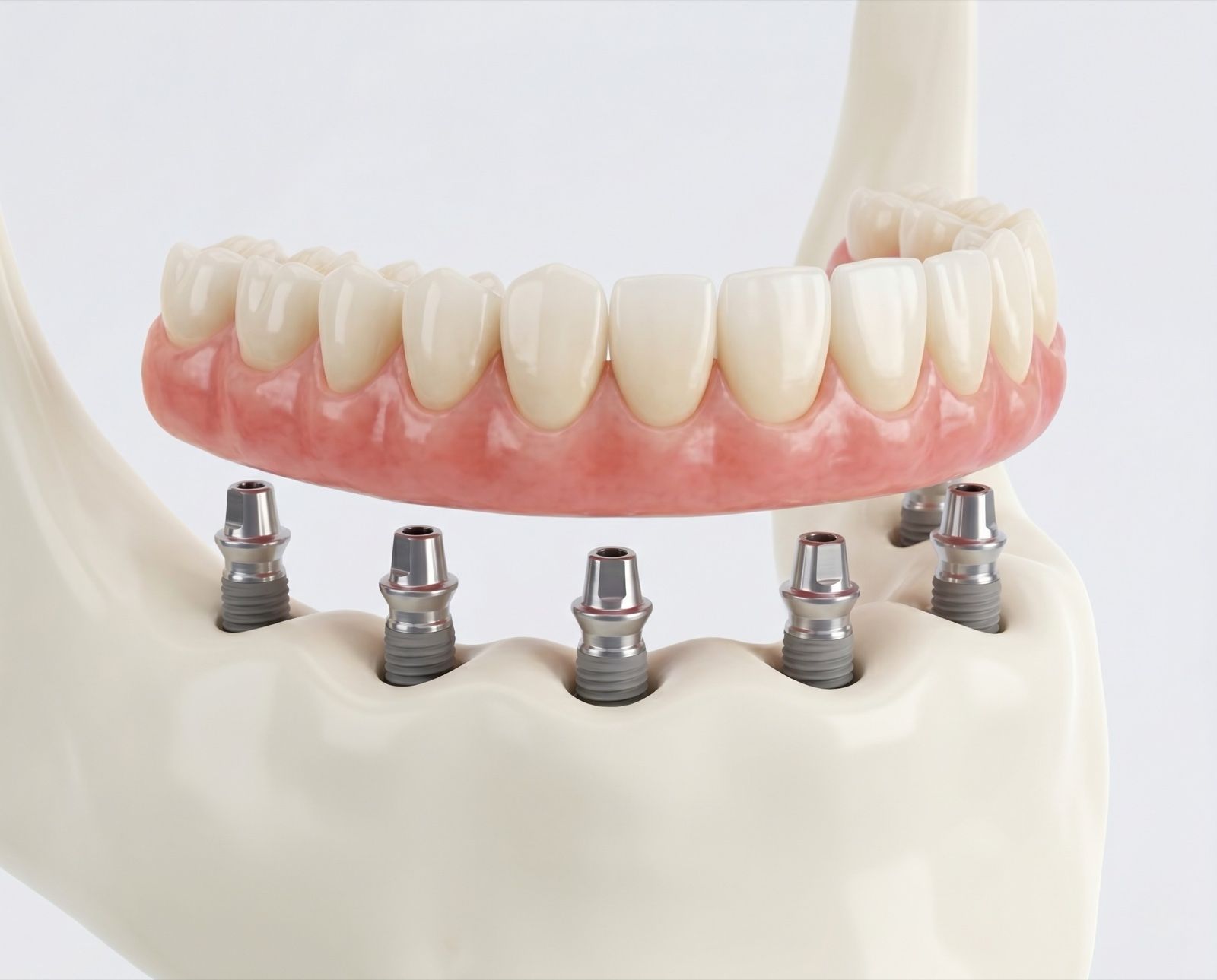
- The teeth are fixed in place. You do not take them out.
- Planning starts with an exam and a 3D X-ray to look at your bone.
- It is a bigger treatment than a single implant, with more visits and more healing time. We will go over the steps, the time involved and the cost with you before you decide.
- Fixed does not mean maintenance-free. You clean under the teeth every day, and the teeth or the small screws that hold them can wear and need repair over the years.
If there is not enough bone
After a tooth is lost, the bone that held it slowly shrinks. Gum disease can take bone away too. An implant needs enough bone to hold it.
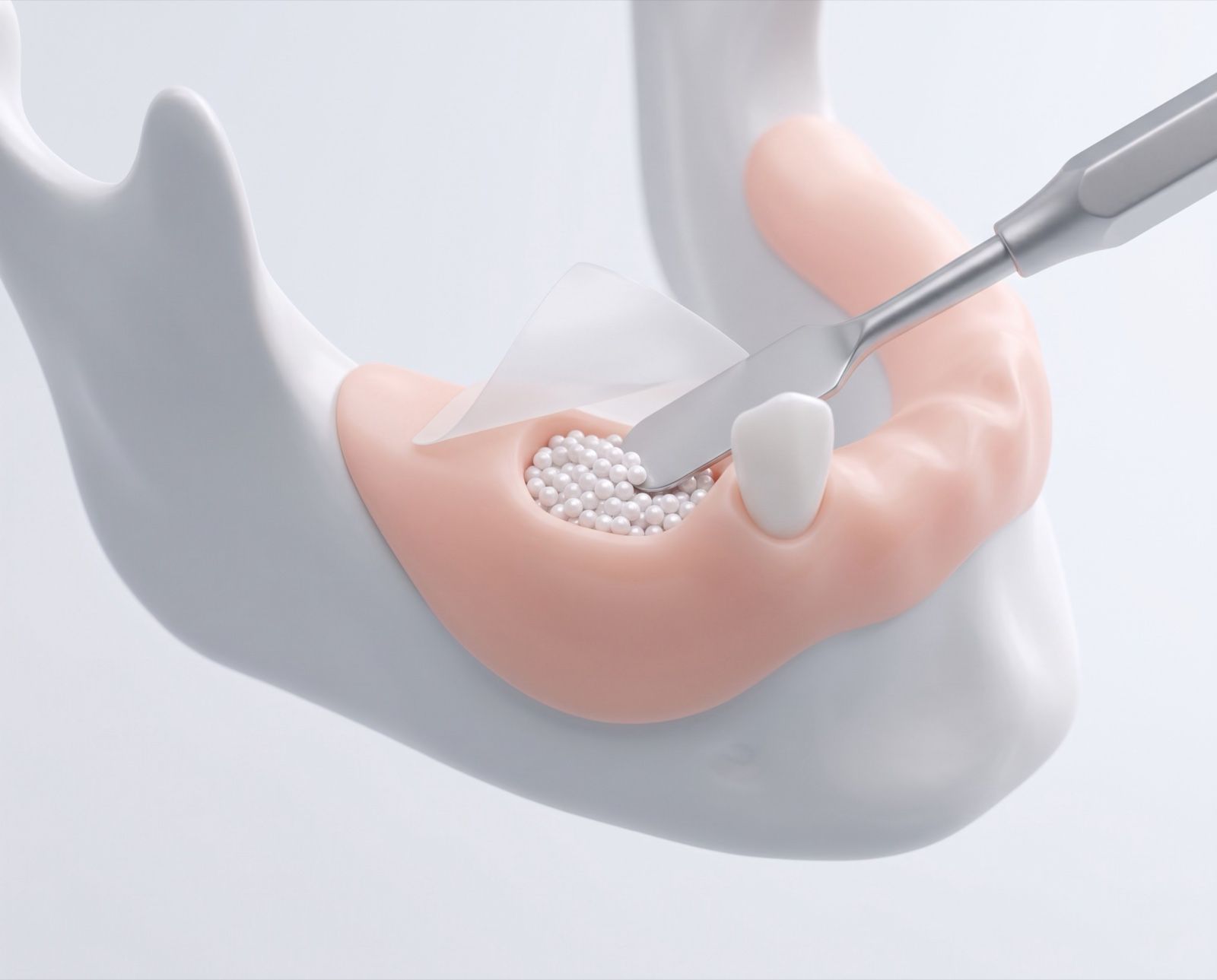
When there is too little, a bone graft can sometimes build it back up. Graft material is placed where more bone is needed, and your own bone grows into it over several months. If the 3D X-ray shows you would need a graft, we will tell you what that involves before you decide.
Is an implant right for me?
It depends on your health, your gums, and how much bone you have. Implants are not right for everyone. We will examine you and tell you what we think, along with your other choices.
Caring for an implant
- Brush it twice a day and clean around it every day, the same as a natural tooth.
- An implant cannot get a cavity, but the gum and bone around it can get infected. Bleeding or soreness around an implant is a reason to call.
- Keep coming for checkups and cleanings, so we can look at the implant and the bone around it.
- If you grind your teeth, ask us about a night guard.
Other choices
Bridges and dentures and partials also replace missing teeth. A denture can also be made to snap onto implants, which holds it steadier than a denture that rests on the gums. Ask us whether that is a choice for you.
Cost and insurance
Implant treatment has several parts: the planning, the implant, and the tooth that goes on it. Ask us for the cost of the whole treatment, not one part, and what your plan is expected to pay. We accept Cherry and CareCredit payment plans. Those companies decide who is approved and on what terms. See insurance and cost.
Common questions
Does getting an implant hurt?
The area is numbed, so you feel pressure and vibration, not pain. We also offer sedation. Afterward, expect soreness and some swelling for several days.
How long does it take from start to finish?
Months, not weeks. The bone needs time to grow around the post before the crown goes on. If you need a tooth taken out or a bone graft first, that adds time. We will give you a timeline for your own case before you decide.
Am I too old for implants?
Age by itself is not the limit. Your health, your gums and how much bone you have matter more. Implants are not placed in children and teens whose jaws are still growing.
How long do implants last?
An implant can last many years, but nothing in the mouth is permanent. The crown on top can wear or chip and need to be replaced, and the gum and bone around an implant can get infected if it is not kept clean.
What is All-on-4?
It is a common name for full-arch implants: a full set of upper or lower teeth fixed onto four implants. Some people need six, which is called All-on-6. The teeth stay in place, and you do not take them out.
Does insurance pay for implants?
Some dental plans pay for part of implant treatment and some pay for none of it. Ask us for the cost of the whole treatment and what your plan is expected to pay before you decide.