
What gum disease is
Gum disease starts when plaque and tartar build up along and under the gumline. Early on, gums get red and bleed when you brush. This stage is called gingivitis.
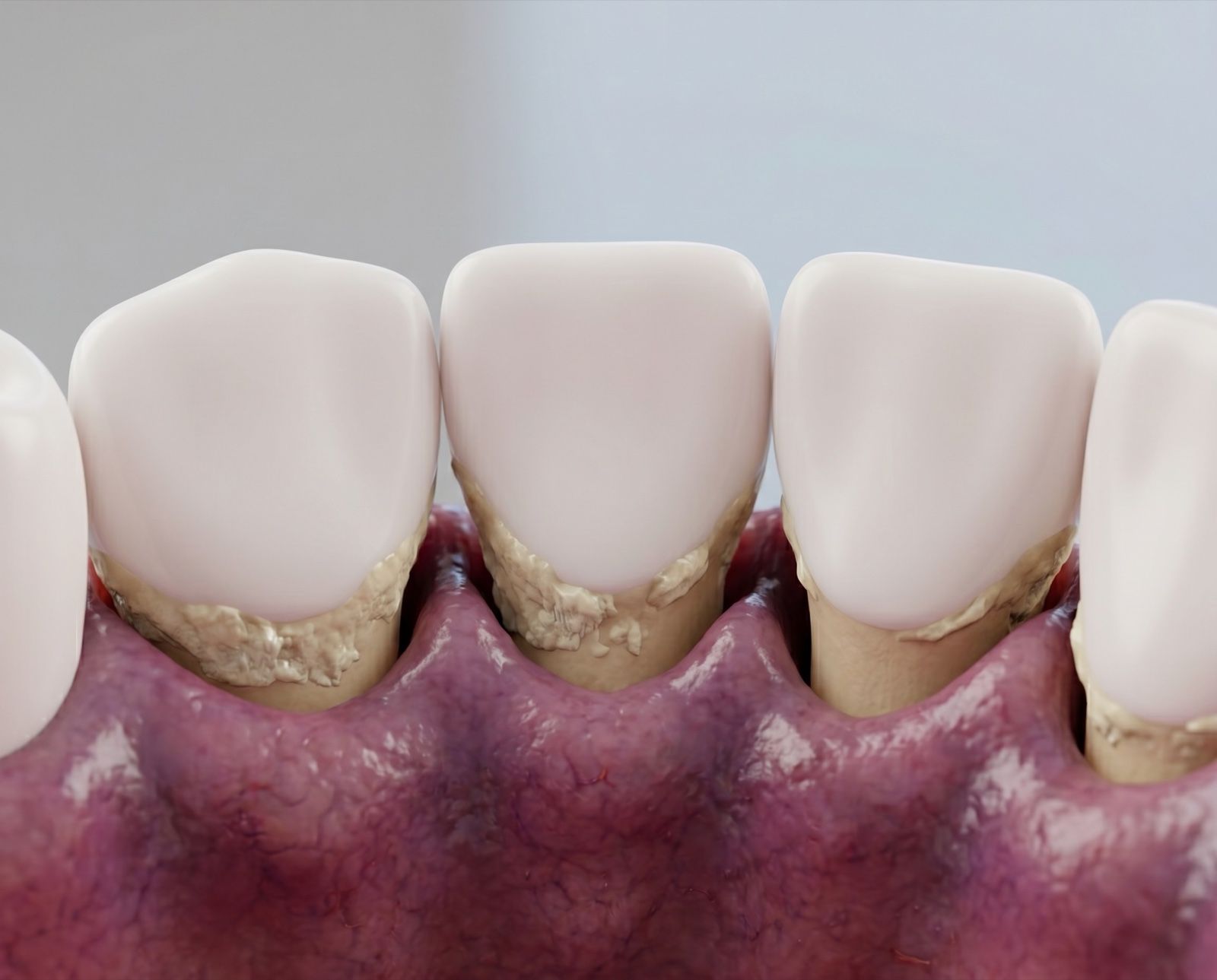
If it goes on, the gums pull away from the teeth and form pockets. Germs collect in the pockets and can damage the bone that holds your teeth. This stage is called periodontitis.
Gum disease often does not hurt, so many people do not know they have it. Smoking and diabetes both raise the risk.
Signs to watch for
- Gums that bleed when you brush or floss
- Red, puffy or sore gums
- Bad breath that does not go away
- Gums that look like they are pulling back from the teeth
- Teeth that feel loose
How we check for it
We measure the space between your teeth and your gums with a small measuring tool. Healthy gums fit snugly around the teeth. Deeper spaces, called pockets, are a sign of gum disease.
X-rays show whether any of the bone around the teeth has been lost. Ask us to show you both.
What a deep cleaning is
A deep cleaning removes plaque and tartar from below the gumline and smooths the roots so the gums can heal against the teeth. Dentists call it scaling and root planing.
- We numb the area first.
- It is often done over two visits, one side of the mouth at a time.
- Your gums may be sore for a few days afterward.
A deep cleaning is not the same as a regular cleaning, and insurance treats it differently. Before we start, ask us to show you what we see and what your plan is expected to cover.
What it can and cannot do
A deep cleaning can:
- Help control gum disease and lower the risk of more damage
- Reduce bleeding, swelling and bad breath
- Make the pockets shallower, so they are easier to keep clean at home
It cannot:
- Bring back bone that has already been lost
- Keep gum disease away by itself. That takes daily care at home and regular cleanings.
As the swelling goes down, the gums can sit a little lower on the teeth. Your teeth may look slightly longer, and they may be sensitive to cold for a while.
Some gum disease needs more than a deep cleaning. If that is true for you, we will tell you and refer you to a gum specialist.
After a deep cleaning
Gum disease can be controlled, but it can come back. After a deep cleaning, most people need cleanings more often than twice a year, usually every three to four months. These visits are called periodontal maintenance.
At home:
- Brush twice a day, and angle the brush toward the gumline.
- Clean between your teeth every day. This matters more now than it did before.
- If you smoke, cutting back or quitting helps your gums heal.
Cost and insurance
A deep cleaning and the maintenance cleanings that follow are billed differently from a regular cleaning, so the cost to you can be different. Before any treatment starts, ask us what it will cost and what your plan is expected to pay. See insurance and cost.
Common questions
Does a deep cleaning hurt?
We numb the area first, so you should feel pressure and movement, not pain. Your gums may be sore for a few days afterward, and your teeth may be sensitive to cold for a while.
Can gum disease be cured?
The early stage, gingivitis, can be turned around with a cleaning and good care at home. The later stage, periodontitis, can be controlled but not cured. Bone that has been lost does not grow back from a cleaning, which is why catching it early matters.
Can I just get a regular cleaning?
A regular cleaning only cleans above the gumline. If the problem is below the gumline, a regular cleaning leaves it in place. Ask us to show you the measurements and the X-rays, so you can see why we are recommending a deep cleaning.
Why do I need cleanings every three or four months afterward?
The germs that cause gum disease build back up in the pockets within a few months. Cleanings that are closer together keep them from getting ahead of you again.